Software and Licensing Explained: Models, Rights and How to Monetize

When you "buy" software, you do not actually purchase the underlying code. Instead, you are buying a set of permissions. This distinction is the core of software and licensing, a legal and commercial framework that dictates how digital products are distributed, used, and monetized.
Whether you are a SaaS founder protecting your intellectual property, an agency looking to scale, or an entrepreneur wanting to acquire pre-built tools, navigating this landscape is critical. Getting it right means building a highly profitable, scalable business; getting it wrong can lead to costly legal battles or lost IP.
Key Takeaways
| License Category | Core Concept | Ideal For | Monetization Potential |
|---|---|---|---|
| Proprietary | Closed source, strict usage permissions | Commercial SaaS, enterprise software | High (recurring subscriptions, seat-based licenses) |
| Permissive Open Source | Minimal restrictions; modify and redistribute | Developers, infrastructure tools | Indirect (support, premium enterprise add-ons) |
| Copyleft Open Source | Must share modifications under the same license | Community projects, public utilities | Low directly; protects open-source integrity |
| Source Code Rights | Buyer acquires raw code to modify, run, or resell | Agencies, serial entrepreneurs | Extremely High (white-labeling, rapid market entry) |
Why Licensing Code is the Ultimate Cheat Code for Modern Founders (An Editorial)
I have watched countless brilliant founders burn through hundreds of thousands of dollars and two years of their lives trying to build a SaaS product from scratch. They write every line of code, debug endlessly, and by the time they launch, the market has moved on or they have run out of capital.
It is a painful cycle, and honestly, it is often unnecessary.
In my view, the smartest entrepreneurs today do not build from scratch. They understand that software is a modular asset. By leveraging strategic licensing—specifically acquiring source code licensing rights or utilizing white-label agreements—you can bypass the development bottleneck entirely.
Why build a standard billing engine, an AI wrapper, or a customer portal when you can license a proven, battle-tested version of it? When you shift your perspective from "I must build this" to "I can license and customize this," your time-to-market drops from twelve months to twelve days.
Licensing is not about cutting corners; it is about capital efficiency. It is the ultimate leverage in the digital economy.
What is Software and Licensing and Why Does It Matter?
To build a successful digital business, we must first strip away the misconception that software is a physical commodity. Software is intellectual property. The mechanism that bridges the gap between the creator's ownership and the user's utility is the license.
Defining the Software License Agreement
A software license agreement is a legally binding contract that establishes how a piece of software can be used, modified, and redistributed. It defines the relationship between the licensor (the creator or owner) and the licensee (the user or buyer).
For end-users, this agreement typically takes the form of an End User License Agreement (EULA) or a cloud-based Terms of Service (ToS). These documents outline user restrictions, liability limitations, and payment terms, ensuring that the software provider retains ultimate ownership of the asset.
The Role of Intellectual Property in Software Distribution
Software is protected under global copyright laws as a literary work. According to the World Intellectual Property Organization (WIPO), copyright protection arises automatically upon the creation of the software, protecting the original source code and the object code.
Without a formal licensing agreement, any distribution of your software could legally compromise your intellectual property. A robust license acts as a shield, ensuring that even when users download your software onto their local machines or access it via the cloud, your proprietary code remains legally yours.
Why Modern Businesses Must Understand Licensing Frameworks
For modern businesses, managing software assets is no longer just an IT task—it is a financial imperative. If you do not understand how your tools are licensed, you risk severe compliance penalties or massive overspending.
To mitigate these risks, many enterprises turn to structured software asset management (SAM) strategies. In fact, research from Gartner indicates that organizations implementing active Software Asset Management (SAM) programs can save up to 30% on their software spend in the first year.
By understanding the rules of engagement, you can negotiate better terms, avoid audit traps, and choose to license software instead of building it yourself when speed-to-market is your primary goal.
What Are the Primary Software License Types You Should Know?
Not all licenses are created equal. The software industry generally splits into two massive camps: proprietary (closed source) and open source. Within these camps lie distinct software license types that dictate what you can and cannot do with the code.

Proprietary vs. Open Source Licenses
- Proprietary Licenses: These are commercial, closed-source agreements. The developer retains exclusive ownership of the source code. Users pay for the right to run the software but are strictly forbidden from viewing, modifying, or redistributing the underlying code. Think of Microsoft Windows or Adobe Creative Cloud.
- Open Source Licenses: These allow anyone to view, modify, and distribute the source code. However, "open" does not mean "free of rules." Open-source software is governed by specific licenses approved by the Open Source Initiative (OSI), which fall into two main categories: permissive and copyleft.
Permissive vs. Copyleft Open Source Models
Understanding the divide between permissive and copyleft licenses is critical if you plan to use open-source code in your commercial products:
- Permissive Licenses (e.g., MIT, Apache 2.0, BSD): These are highly flexible. They allow you to take the open-source code, modify it, integrate it into your proprietary commercial software, and sell it without forcing you to release your own source code.
- Copyleft Licenses (e.g., GPL, AGPL): Often called "viral" licenses. If you modify copyleft code and distribute your software, you are legally obligated to make your entire codebase open-source under that same copyleft license. For commercial SaaS founders, accidentally importing GPL-licensed code into a proprietary product can be a catastrophic legal mistake.
Understanding Source Code Licensing Rights
For agencies and B2B buyers, acquiring source code licensing rights is often the gold standard. When you acquire these rights, you are buying the legal permission to modify, rebrand, and sometimes even resell the software as your own.
This is highly distinct from standard SaaS subscriptions. Instead of paying per user, you own a copy of the source code. You can host it on your own servers, customize the features to fit your clients' exact needs, and eliminate recurring third-party software costs.
Pro Tip: When acquiring source code rights, always verify if the license is "exclusive" or "non-exclusive." A non-exclusive license means the creator can sell the same codebase to other buyers, while an exclusive license gives you sole rights to that specific version of the product.
If you want to explore how these transactions work in a secure environment, understanding the mechanics of a software licensing marketplace is a great place to start.
How Do Modern SaaS Licensing Models Work?
The rise of cloud computing has transformed how software is delivered and billed. We have transitioned from buying physical CD-ROMs with perpetual licenses to dynamic, cloud-hosted saas licensing models that scale with usage.
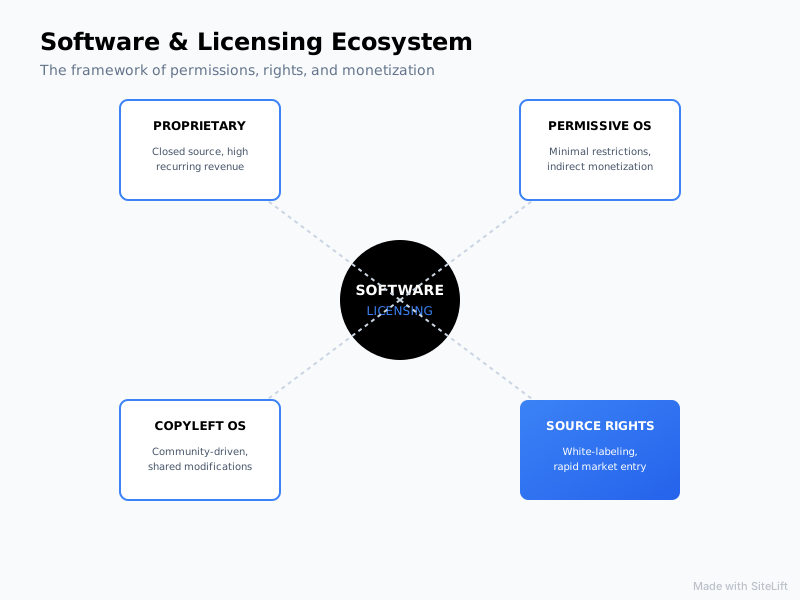
Infographic by SiteLift
Subscription-Based and Per-User Licensing
The subscription model remains the bedrock of the SaaS industry. Instead of a large upfront payment, users pay a recurring monthly or annual fee.
- Flat-Rate Pricing: Users pay a single, fixed fee for access to the entire software suite, regardless of how many people use it or how much data they consume.
- Per-User (or Per-Seat) Pricing: The classic enterprise model. Your monthly cost scales linearly with the number of team members added to the account. While highly predictable, it can sometimes discourage adoption within large organizations.
To dive deeper into how these options compare financially, take a look at our breakdown of SaaS license models (perpetual vs subscription vs usage-based).
Usage-Based and Consumption Models
As infrastructure costs become more variable, many modern SaaS platforms—especially dev tools, APIs, and AI agents—are moving toward consumption-based licensing.
Under this model, you only pay for what you use. This might be measured in gigabytes of data processed, API calls made, or AI tokens consumed. It aligns the customer’s cost directly with the value they receive, making it an incredibly attractive entry point for startups.
White-Label and Reseller Licensing Agreements
For digital agencies and enterprise consultants, white-label software licensing is a massive revenue generator.
Under a white-label agreement, you purchase the rights to a software product built by someone else, strip out their branding, apply your own logo, domain, and color scheme, and resell it to your clients as your proprietary solution.
This model allows agencies to instantly offer high-value software solutions—like custom CRM portals, marketing automation suites, or SEO tools—without hiring a single developer. You charge your clients a premium subscription, pay a wholesale licensing fee to the creator, and pocket the margin.
How Can You Monetize Your Software and Licensing Strategy?
If you are a developer or founder, your software is your most valuable asset. But how you package and license that asset determines your market reach and profit margins.
Choosing the Right Licensing Strategy for Your Product
Before launching, you must determine how your software will be delivered and billed. Ask yourself these key questions:
- Is your product best served as a cloud SaaS, or does it require on-premise installation? Cloud SaaS is easier to monitor and update, but enterprise clients often demand self-hosted options for security compliance.
- Are you selling utility or scale? If your software provides massive value to a few users, a high-ticket per-seat model works best. If it scales based on data volume, a consumption-based model is more appropriate.
- Can you sell the source code directly? Selling commercial source code licenses to agencies can generate massive upfront cash injections, which you can then use to fund further development.
For a step-by-step framework on setting up these agreements, check out our guide on how to license your SaaS product.
Protecting Your IP While Maximizing Distribution
Monetizing your software requires a delicate balance between accessibility and security. To protect your intellectual property, you should implement:
- Cryptographic License Keys: Ensure that self-hosted software requires a valid, cryptographically signed key to run, preventing unauthorized duplication.
- Software Escrow Services: When closing large enterprise deals, buyers may demand a software escrow. This means a neutral third party holds your source code. If your company goes out of business or fails to maintain the software, the source code is released to the enterprise buyer so they can keep their operations running.
Leveraging B2B Marketplaces for Code and SaaS Sales
Historically, finding buyers for software licenses or source code was an informal, risky process involving back-alley forum deals or expensive M&A brokers.
Today, specialized B2B marketplaces like LicenseSaaS have streamlined this process. LicenseSaaS acts as a secure intermediary, connecting founders who have built valuable SaaS, AI agents, or APIs with agencies and entrepreneurs looking to acquire, rebrand, or white-label them.
By utilizing escrow-protected payments and structured legal templates, these platforms make buying and selling software licenses as simple and safe as buying a domain name.
What Are the Best Practices for Managing License Compliance?
Whether you are a software creator or an enterprise buyer, compliance is a high-stakes game. According to the BSA | The Software Alliance, unlicensed software use still accounts for a significant percentage of global installations, exposing businesses to severe security vulnerabilities, data malware, and massive legal liabilities.
Implementing Automated License Verification
For software creators, manual license management does not scale. You need automated systems to enforce compliance:
- Phone-Home Mechanisms: Your software periodically pings a central license server to verify that the active subscription is paid and valid.
- Feature Flagging: If a user downgrades or fails to pay, your system automatically disables premium features or limits usage quotas without requiring a complete reinstallation.
Conducting Regular Software Audits
For buyers, especially mid-market and enterprise companies, running blind to your software usage is a recipe for disaster. According to Flexera's State of Tech Spend Report, SaaS spend management and license compliance remain top priorities for over 80% of enterprise IT leaders.
To stay compliant, businesses should conduct bi-annual audits of their software stacks. This involves mapping out every active subscription, identifying unused "zombie" seats, and ensuring that no developer has accidentally integrated restrictive copyleft open-source code into proprietary company products.
If you are managing a growing portfolio of tools, utilizing a structured checklist for license tracking at scale can save your team dozens of hours of manual audit work.
Handling License Violations and Unauthorized Redistribution
If you discover that your software is being used outside the bounds of your license agreement—such as a buyer sharing their single-user credentials with an entire department—your response should be measured but firm:
- Document the Infringement: Gather server logs, API request histories, or public instances of your code being used without authorization.
- Initiate Friendly Outreach: Often, license violations are honest mistakes caused by employee turnover or lack of internal training. Send a polite notification offering to upgrade them to the correct commercial tier.
- Issue a Formal Cease and Desist: If the user refuses to comply or actively redistributes your proprietary code, escalate the matter legally, utilizing your copyright protections under global standards like the DMCA.
FAQ
What is the difference between a software license and a SaaS subscription?
A software license grants you the legal right to use, modify, or distribute a piece of software (often installed locally on your hardware). A SaaS subscription is a delivery and billing model where you pay a recurring fee to access software hosted on the provider's cloud servers. In SaaS, you do not own or host the code; you are paying for ongoing access to a service.
Can I legally resell software if I buy the source code licensing rights?
Yes, but only if the specific licensing agreement you signed explicitly grants you "resale" or "white-label" rights. If you purchase a standard commercial license, you are only allowed to use the software internally. Always review the contract terms or use an escrow-backed marketplace like LicenseSaaS to ensure you are legally acquiring the right to resell.
What happens if a business violates a software license agreement?
Violating a license agreement can result in severe legal and financial consequences. The software creator can terminate your access, sue for copyright infringement and damages, and demand a full audit of your systems. Additionally, using unlicensed or pirated software exposes your business to massive cybersecurity risks, as these files often contain malware or lack critical security patches.
What is white-label licensing and how does it benefit agencies?
White-label licensing allows an agency to purchase a software product built by a third party, remove the original branding, apply their own logo and domain, and sell it to their clients as their own proprietary tool. This benefits agencies by allowing them to instantly offer high-value SaaS products, build recurring revenue streams, and scale their services without the high costs and risks of custom software development.
How do API licensing models differ from standard software licenses?
Standard software licenses govern how an application is run on a device or accessed via the web. API licensing models, on the other hand, govern access to a specific data stream or service endpoint. They are typically billed based on consumption (e.g., cost per 1,000 requests) and focus heavily on rate limits, data caching rights, and developer usage guidelines rather than user seats.
Ready to Leverage the Power of Software Licensing?
Navigating the world of software and licensing does not have to be an overwhelming legal headache. Whether you are a developer looking to monetize your hard work through commercial licensing, or an entrepreneur looking to launch a SaaS brand in days rather than years, the infrastructure is already built for you.
At LicenseSaaS, we connect creators with strategic buyers, providing the escrow services, legal templates, and AI-driven matching tools needed to transfer code and SaaS licenses safely and seamlessly.
Stop building from scratch and start scaling with leverage. Explore our marketplace today to find pre-built SaaS, AI agents, and APIs ready for white-labeling and deployment.
— licensesaas.com
More from the Blog

Apps for Sale: How to Buy, License and Rebrand Without Building From Scratch
Explore how to evaluate apps for sale, safely navigate IP acquisitions or licensing, conduct technical due diligence, and launch without building from scratch.

White Label Software 101: How to Rebrand, License and Launch in Weeks
Learn how white label software works, license costs, and 5 steps to rebrand and launch your SaaS in weeks. Actionable guide for agencies.

SaaS Contract Essentials: What Founders and Buyers Must Check Before Signing
Learn what founders and buyers must check in a SaaS contract before signing. Review key licensing clauses, SLAs, liability caps, and auto-renewals.