
Escrow Protection for Software Transactions: Securing Code and Capital
Imagine wire transferring $150,000 to acquire a promising white-label SaaS product, only to receive a broken GitHub repository that refuses to compile. Or, as a software founder, handing over your proprietary codebase only for the buyer's payment to bounce. This is where software escrow protection steps in. It is the ultimate bridge of trust in modern digital M&A, ensuring neither party is left empty-handed.
By acting as a neutral, third-party intermediary, software escrow secures both the buyer’s capital and the seller’s intellectual property (IP). If you are buying, selling, or licensing high-value software, understanding this mechanism is non-negotiable for mitigating transaction risk.
| Escrow Type | What It Secures | Technical Verification | Best For |
|---|---|---|---|
| Traditional Financial Escrow | Cash / Capital only | None (Manual release on buyer sign-off) | Real estate, basic physical goods |
| Legacy Source Code Escrow | Static code deposits (CDs, physical drives) | Rare / Basic file completeness checks | On-premise legacy enterprise software |
| Modern Software Escrow Protection | Live code, cloud infra, APIs, databases, keys | Automated builds, CI/CD integration, security audits | SaaS, AI agents, white-label software, APIs |
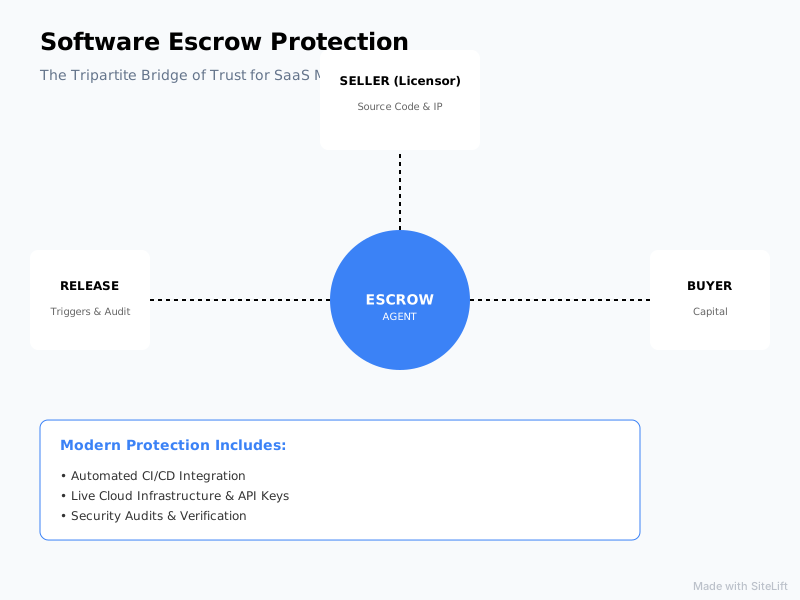
Infographic by SiteLift
What Is Software Escrow Protection and How Does It Work?
At its core, software escrow protection is a tripartite legal and technical arrangement between a software provider (licensor/seller), a software user (licensee/buyer), and an independent escrow agent. The agent holds the software's source code, documentation, and operational credentials in a secure account. These assets are only released to the buyer if specific, pre-negotiated conditions—known as "release triggers"—are met.
This process is highly recognized by global IP bodies. For instance, the World Intellectual Property Organization (WIPO) highlights software escrow as a standard risk-mitigation tool in international licensing agreements, ensuring that businesses can access critical source code if their vendor fails to support the product.
The Core Mechanics: Neutral Custody of Code and Capital
The transaction flows through a series of structured checkpoints:
- Agreement: Buyer and seller agree on terms, including the purchase price, inspection window, and release conditions.
- Deposit: The seller deposits the source code, documentation, and deployment keys into the escrow platform. Simultaneously, the buyer deposits the transaction capital into the secure escrow account.
- Verification: The escrow platform (or a designated third party) verifies the technical validity of the deposited assets.
- Settlement: Once the buyer completes their inspection and confirms the software matches the agreed-upon specifications, the funds are released to the seller, and the IP ownership is transferred to the buyer.
Software Escrow vs. Traditional Financial Escrow
Standard financial escrow platforms are blind to the assets they help transfer. They can verify that money has arrived, but they cannot verify whether a Git repository contains functional code or useless filler files.
True source code escrow services go far deeper. They do not just hold a zip file; they secure the entire software ecosystem. This includes repository snapshots, external dependencies, build documentation, Docker containers, and deployment keys. If a platform cannot verify the technical integrity of the asset, it is not providing true software escrow—it is merely acting as a basic bank account.
The Role of Technical Verification and Source Code Audits
Technical verification is the safety net of any software transaction. It prevents a common post-deal nightmare: inheriting a codebase riddled with critical bugs or missing dependencies.
Verification tiers range from basic file-presence checks to full automated build testing. In a high-value transaction, the escrow agent or platform executes the build instructions in a clean sandbox environment. This process confirms that the deposited source code actually compiles, deploys, and matches the live product prior to fund disbursement.

Why Is Escrow Essential for B2B Software Transactions and SaaS Licensing?
Software is a highly abstract asset. Unlike physical real estate, digital products can be copied instantly, corrupted easily, or withheld maliciously. This unique nature introduces severe vulnerabilities to both sides of a transaction.
Mitigating Counterparty Risk in Software Buyouts and Mergers
In digital M&A, the information asymmetry between buyer and seller is massive. A study by PwC on technology transactions found that over 30% of digital asset acquisitions experience post-deal friction due to undocumented technical debt or missing code repositories. Without an escrow-protected inspection window, buyers are forced to take a leap of faith, hoping the seller's codebase is as clean as their slide deck claims.
Protecting Buyers Against Vendor Bankruptcy or Service Abandonment
When you license white-label software or build your business on top of third-party APIs, you are deeply dependent on that vendor's operational survival. If they go bankrupt or abruptly abandon the product, your business could grind to a halt.
According to research by Gartner, over 80% of enterprise software applications will involve third-party or open-source dependencies by 2025, elevating the necessity of source code continuity guarantees. Furthermore, the Software and Information Industry Association (SIIA) indicates that intellectual property disputes and source code abandonment are among the top five operational risks cited by SaaS enterprise buyers.
A robust escrow agreement ensures that if the vendor disappears, you receive the source code and hosting credentials required to keep your systems online.
Safeguarding Proprietary Intellectual Property for Founders and Vendors
Escrow is not just for buyers. Founders risk having their proprietary code stolen or copied during the due diligence phase if they share it too early. B2B software transaction security must protect the seller's life's work. By utilizing an escrow platform, sellers can prove the completeness of their code to a neutral third party without exposing their raw IP to a buyer before payment is secured. It also prevents chargebacks and payment defaults once the code is handed over.
Traditional Escrow vs. Smart Contract Escrow for SaaS: Which Is Better?
The software escrow industry is undergoing a massive shift. Legacy providers who built their businesses in the 1990s are struggling to keep pace with the speed of modern cloud-native development.
Legacy Legal Custodians: High Costs and Slow Turnaround
Traditional enterprise escrow services, such as those pioneered by Iron Mountain, were designed for physical media. Historically, developers would literally mail backup tapes or CDs to physical vaults.
Today, while these legacy providers have adopted digital uploads, their processes remain bogged down by manual legal reviews, rigid contracts, and astronomical setup fees (often running into thousands of dollars per year). For a fast-moving startup, agency, or founder executing a mid-market SaaS acquisition, this legacy approach is simply too slow and expensive.
Smart Contract Escrow for SaaS: Programmatic and Milestone-Driven
The rise of smart contract escrow for SaaS has introduced a highly efficient alternative. By using decentralized or programmatic code triggers, smart contracts can automate the inspection and release phases of a transaction.
For instance, when a developer pushes a verified Git commit that passes automated CI/CD tests, the smart contract can automatically release a specific milestone payment to the seller. This eliminates human bias and drastically reduces transaction friction.
The Emergence of Hybrid Digital Asset Escrow Platforms
While pure smart contracts are incredibly efficient, they lack the flexibility needed to handle complex legal disputes or subjective verification criteria. This has paved the way for hybrid platforms like LicenseSaaS.
These modern platforms blend the best of both worlds: they utilize automated code validation, GitHub integration, and secure digital asset transfer protocols, while maintaining a legally binding transactional escrow framework and human dispute resolution if something goes wrong.
How to Structure a Safe Digital Asset Transfer: Step-by-Step
Executing a safe digital asset transfer requires a methodical approach. You cannot simply hand over a GitHub login and call it a day.
Step 1: Setting Clear Release Conditions and Inspection Windows
Your software purchase agreement must define exactly what triggers the release of funds. Standard release conditions include:
- Successful compilation of the codebase in a clean environment.
- Absence of critical, unmapped security vulnerabilities.
- Verification of ownership (ensuring the seller actually owns the IP they are selling).
The buyer should also be granted a structured inspection window—typically 5 to 14 days—to audit the assets within the secure environment before the escrow platform finalizes the payout.
Step 2: Source Code, Cloud Infrastructure, and Domain Migration
A complete software transfer involves migrating an entire operational ecosystem. Ensure your transfer checklist covers:
- Git Repositories: Full commit history transfer on GitHub, GitLab, or Bitbucket.
- Cloud Infrastructure: Transfer of AWS, GCP, or Azure accounts, or the clean migration of Terraform/Kubernetes configurations.
- Domain & DNS: Transfer of the primary domain name and control of DNS records.
- Third-Party APIs: Handover of master accounts for Stripe, SendGrid, Twilio, and other integrated services.
- Databases: Secure, sanitized transfer of user databases in compliance with global privacy laws (GDPR/CCPA).
Step 3: Verification, Acceptance Testing, and Capital Settlement
Once the assets are migrated into the escrow custody, the buyer conducts acceptance testing. If the software matches the technical disclosures, the buyer signs off, the escrow agent releases the funds to the seller, and the transaction is complete.
If the software deviates substantially from what was promised, the dispute resolution protocol is triggered, freezing the funds until an amicable resolution or arbitral decision is reached.
Pro Tip: Always ensure that the escrow agreement explicitly defines "functional completeness." Do not rely on vague terms like "working software." Specify the exact framework versions, database structures, and external APIs required for the application to run.
Key Criteria for Choosing Software Escrow Protection and Transaction Platforms
Not all escrow services are equipped to handle modern SaaS, APIs, or AI agent codebases. When evaluating platforms, look for these essential capabilities:
Automated CI/CD and Version Control Integration
A modern platform should integrate directly with your development workflow. Look for features like automated GitHub repository mirroring, SHA-256 hash checks to verify file integrity, and continuous backup synchronization. This ensures that the escrowed code is always up to date with the live production environment, rather than being an outdated snapshot from six months ago.
Data Compliance, Encryption, and Multi-Signature Security
Security is paramount when handling proprietary codebases and sensitive user databases. The platform must utilize bank-grade AES-256 encryption-at-rest and TLS 1.3 in-transit. For high-value enterprise transactions, multi-signature (multi-sig) approval workflows add an extra layer of security, requiring multiple authorized stakeholders to sign off before any funds or code repositories are released.
If you are dealing with security-focused software, utilizing tools like ArtifactShield can help automate vulnerability scanning and compliance reporting during the escrow phase, giving the buyer immediate proof of code quality.
Integrated Dispute Resolution and Arbitral Frameworks
If a dispute arises over code quality or intellectual property ownership, you do not want to end up in a traditional court system, which can take years and cost tens of thousands of dollars. Choose a platform that features built-in, binding arbitration tailored specifically to software and intellectual property. This allows technical experts to review the codebase and make a swift, binding decision in days rather than months.
[Buyer Deposits Funds] ──> [Seller Deposits Code] ──> [Automated Build Verification]
                                                               │
                                         ┌─────────────────────┴─────────────────────┐
                                         ▼                                           ▼
                                  [Build Passes]                              [Build Fails]
                                         │                                           │
                                 [Inspection Window]                         [Dispute Raised]
                                         │                                           │
                        ┌────────────────┴────────────────┐                          ▼
                        ▼                                 ▼                  [Expert Arbitration]
               [Buyer Approves]                   [Buyer Rejects]
                        │                                 │
                        ▼                                 ▼
              [Funds to Seller]                    [Dispute Protocol]
              [Code to Buyer]
Why Legacy Software Escrow is Broken (And How We Are Fixing It)
Let’s be honest: the traditional software escrow industry is stuck in the past.
I have seen transactions stall for weeks because a legacy escrow provider required physical notary signatures on paper contracts just to authorize a Git repository transfer. In a world where developers can spin up global cloud infrastructure in seconds, relying on legacy legal custodians who do not know the difference between a pull request and a database query is a massive bottleneck.
At LicenseSaaS, we believe that B2B software transaction security should be as agile as the code it protects. Whether you are acquiring a specialized Axiom AI Governance codebase to launch a branded compliance tool, or selling a custom API microservice, you need a transactional framework that understands modern code architectures.
We built our platform to bridge this exact gap. By combining automated technical verification with secure transactional escrow, we ensure that buyers get exactly what they pay for, and sellers get paid exactly what they are owed—without the legacy friction.
If you want to explore how different licensing structures impact your transaction, check out our comprehensive guide on SaaS Licensing Models & License Types, or brush up on key legal definitions in our SaaS Licensing Glossary.

FAQ
What is software escrow protection, and how does it protect buyers and sellers?
Software escrow protection is a secure arrangement where a neutral third party holds a software product's source code and transaction capital. It protects buyers by ensuring they receive functional, verified code before their money is released, and it protects sellers by ensuring the buyer’s funds are fully secured and verified before the proprietary IP is handed over.
What are common release triggers in a source code escrow agreement?
The most common release triggers include vendor bankruptcy, failure to maintain or support the software as contractually agreed, or the acquisition of the vendor by a direct competitor of the buyer. In transactional buyouts, the primary trigger is the successful completion of an agreed-upon technical inspection window.
How does smart contract escrow differ from traditional software escrow?
Traditional software escrow relies on manual legal contracts, physical storage, and human intervention to release assets. Smart contract escrow uses automated, programmatic code triggers (such as passing a Git build or verifying an API response) to instantly release milestone payments, reducing transaction costs and human delay.
What assets should be deposited into escrow during a SaaS or source code transaction?
A complete escrow deposit should include the raw source code (Git repositories), build documentation, deployment scripts (Docker/Kubernetes), dependency lists, database schemas, third-party API credentials, domain controls, and any proprietary machine learning models or training datasets.
Can software escrow protect proprietary AI models and API integrations?
Yes. Modern escrow platforms can secure weights, architectures, and training datasets for proprietary AI models, as well as the integration keys and documentation for custom APIs. Technical verification ensures these models can compile and run inference tests before the transaction is finalized.
— licensesaas.com
More from the Blog

How to Monetize AI Agents Through Licensing: A Blueprint for Developers
Learn how to monetize AI agents with licensing, white-label deals & source code sales. Get pricing models, IP tips & enterprise playbook.